Wednesday, 28 April 2010

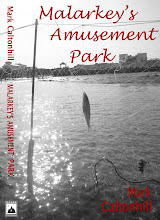
fish of the day

this bus in Shilin (士林) caught my eye


turned out it was some kind of advertisement
(of course. why would anyone put fish on a bus otherwise?)

Tuesday, 27 April 2010

and while on the subject of China Post editorials

my "What children need is not more classes, but their childhood back"

[not my comma, by the way]

has initiated a little debate on the comments board:

Comments
April 20, 2010 stephan97b@
Reply
"let the public outcry be loud"You wish....Most parents see cram schools and extra-curricular classes as a solution rather as a problem: they don't have to take care of their children + they believe their offspring can become "more competitive" in Taiwan's highly materialistic/low creativity environment.Your criticism of Taiwan's 'education authorities' doesn't even come half close to offering any real solution. You refer to the only hint of a feasible solution as: . Legislature is heavily KMT dominated, isn't it? So go tell you good buddies there. Don't waste cyberspace and people's time on your pseudo-moralistic rambling.
April 21, 2010 danny2987@
Reply
Cram school and extra curricular class is not the whole solution, it's one of the options.
April 21, 2010 Skyhermit77@
Reply
To stephan97b: Not everything is political! Kids deserve a childhood...this article has nothing to do with the Blue/Green divide. One of the "solutions" to this problem is that Taiwanese society needs to start talking about the issue...something this piece is trying to do. You need to seek help for your bitterness and illogical worldview.
April 22, 2010 stephan97b@
Reply
Skyhermit77,If you can't spot the direct political references in this article, I'm afraid it's you who's in need of help. Problems with English reading comprehension, maybe?
April 23, 2010 beatles009@
Reply
I don't try to argue but just want to point out something else. If the teaching of Chinese history takes precedence over Taiwanese history at our high schools, does it serve the purpose of education or politics?
April 27, 2010 Skyhermit77@
Reply
Stephen...my English is rather fluent...It doesn't matter if a kid's parents are KMT or DPP supporters....they all believe excessive hours at cram schools are the way to develop a child's mind -- this mindset is harmful. Think over your own educational history...did all that calculus make you a better employee in the modern workforce? Hours spent running around outside in nature as a kid might have made you a happier person than you are today. Life is visceral! Life is dirty! Life is touching, feeling and experiencing! Do you have kids? LET THEM BE KIDS! Skip the cram school and go catch fireflies together! Taiwan needs to reassess the meaning of the word "education."

Is the China Post becoming liberal?

In addition to my own pinko ramblings (see CPE),
there seems to be a spate of liberal social (but not political) editorials lately
in the last fortnight alone, the following have appeared:

treat drunk driving as "premeditated murder" http://www.chinapost.com.tw/editorial/taiwan-issues/2010/04/28/254191/Penalties-are.htm

animal welfare, protection needs strengthening: http://www.chinapost.com.tw/editorial/taiwan-issues/2010/04/26/253933/Animal-protection.htm

suicide ... more social workers needed:http://www.chinapost.com.tw/editorial/taiwan-issues/2010/04/25/253853/Suicide-tragedy.htm

protect PRC sailors working for ROC boats: http://www.chinapost.com.tw/editorial/taiwan-issues/2010/04/24/253715/Govt-should.htm

(more) animal protection: http://www.chinapost.com.tw/editorial/taiwan-issues/2010/04/19/253040/Use-warning.htm

increase water rate: http://www.chinapost.com.tw/editorial/taiwan-issues/2010/04/18/252955/Increasing-water.htm

attack on rogue doctors (without attacking the Health Insurance system): http://www.chinapost.com.tw/editorial/taiwan-issues/2010/04/16/252710/p2/Hospitals-need.htm

government should build some low-cost housing: http://www.chinapost.com.tw/editorial/taiwan-issues/2010/04/14/252410/Govt-should.htm

fish of the day

CNA reports:

Tilapia farmers face stiff competition

Tilapia growers in Liuchia, in southern Taiwan's Tainan County, threw a banquet Sunday to promote their product in the domestic market amid falling exports and strong competition from China.
With more and more Taiwan's tilapia farmers relocating their investments to China, the island's tilapia business has seen a steep decline in exports, while China's exports of the fish have jumped.
According to the United Evening News, China's frozen tilapia exports to the U.S. totaled 29,672 metric tons in 2009, while Taiwan's were 13,180 metric tons. China's frozen tilapia fillet sales to the U.S. last year hit 10,691 metric tons, far in excess of Taiwan's 2,333 metric tons.
China is now the largest tilapia exporter to the U.S., the newspaper said.
In an effort to mitigate the effects of weakening exports, local tilapia farmers are giving more attention to the domestic market. However, an increase in local supply has dragged down domestic prices by 29 percent to 34 percent.
About 90 percent of Taiwan's tilapia species are being grown in China as the industry is moving more and more of its capital there. In addition, Taiwan investors have taken Taiwan's advanced breeding technologies to China, which is now producing a better quality product than Taiwan. ...

... Su said he is worried that Taiwan's tilapia growers will suffer even more once an economic cooperation framework agreement (ECFA) with China is signed as it will require Taiwan to eventually open its market wider to Chinese products. ...

read the whole article [here]

Monday, 26 April 2010

yawn yawn

China Post editorial:


Perhaps Tsai, DPP will think twice about more public debates


Taiwan's groundbreaking first public debate between the president and the leader of the main opposition party concerning government policy went ahead yesterday afternoon as planned. Early indications are that it gained a significant international audience online, in addition to domestic viewers and listeners.


Those expecting high drama will have been disappointed, however, as the two participants, President Ma Ying-jeou and Democratic Progressive Party Chairperson Tsai Ing-wen, managed to remain polite and adhere to the rules of debate. This was in stark contrast to their foot soldiers, partisan experts and media supporters, who over recent weeks have engaged in increasingly vitriolic disputes over the rights and wrongs, benefits and weaknesses, and economic and/or political dimensions to the Economic Cooperation Framework Agreement that Ma's administration plans to sign with China, perhaps as early as June.


Unfortunately, those expecting incisive intellectual jousting would similarly have been disappointed. The two party leaders spent almost every minute of the 150-minute televised debate playing to the camera and wider audience, and merely restating the positions with which anyone interested in this issue would already have been well aware of.


Thus Ma stressed the urgency faced by his government, claiming that eight years of waiting, worrying and time-wasting by the previous DPP administration meant that time was now short for Taiwan to catch up with regional and world economic developments, particularly the latest advances between ASEAN nations and China.


The three prongs of an ECFA signed with the mainland—reducing tariffs, increasing exports and protecting intellectual property rights—would lead to the creation of more than a quarter million jobs. Moreover, Taiwanese businesses that had moved to China would return, and the increased exports to China would attract foreign investment that would naturally lead to further job increases.


Signing the ECFA would open Taiwan's doors to FTAs with other countries, Ma said, and responding to accusations of helping big business at the expense of small and medium-sized firms, the president said that the economies of all such companies were intertwined and helping some would help the others. The ECFA was not for anyone's personal benefit but for the national good. Regarding those industries that would suffer through their inability to compete with Chinese goods, Ma repeated that NT$95 billion would be set aside over 10 years for assistance to domestic industries that experienced any negative impact.


The key difference between the two sides was his administration's open and international approach compared with the closed attitude of the DPP. This latter would lead to Taiwan's marginalization on the world stage.


Regarding fears of a threat to Taiwan's sovereignty, which the ruling Kuomintang had accused the DPP of whipping up, Ma stressed that after signing the ECFA it would be submitted to the Legislative Yuan for scrutiny, and he reaffirmed his commitment to no unification, no independence and no war.”


The DPP's Tsai Ing-wen was similarly unoriginal, merely restating her party's accusations that ECFA negotiations were being undertaken with unnecessary haste and undue secrecy, were not under Taiwan's control, would affect the regional strategic balance, and were of great concern to many laborers, farmers and white-collar workers.


She said Ma only talked about benefits and not about negative impacts, and claimed that within just 10 years 90 percent of domestic agricultural products would be open to tariff-free imports.


If the legislature did not pass the ECFA after it had been signed, would the government resort to stating it was too late to make changes, as it had with the U.S.-beef-import issue, Tsai asked.


In short, she said, it was not her party's incitement but the government's lack of transparency that was causing the public anxiety, she said, repeating her call for a referendum on the ECFA issue.


So, was the debate a disappointing anticlimax and a waste of a pleasant Sunday afternoon after the recent poor weather?


No. The fact that the audience included many from outside the “chattering classes” who may not be so familiar with the ECFA issue, gave President Ma an opportunity to fill the void of understanding that he has often blamed for causing the opposition from much of the public to the agreement.


For the KMT, it showed that the party has moved on from the days when Taiwan's government made decisions behind closed doors, which it then informed the people afterwards. And on a personal level, it showed that Ma is more than capable of holding his own in one-on-one political sparring with the best the opposition can produce.


It also gave him a stage, with the nation watching, to make one final surprise announcement. With the nation's television cameras whirring and in almost his last paragraph before the microphone went dead, President Ma announced that the status of the cross-Strait ECFA discussions was being upgraded, and that he would personally be leading the negotiating team from now on.


Perhaps Tsai and the DPP will not push so hard for televised public debates in the future.


Thursday, 22 April 2010

photo of (another) day

too many words, not enough pictures
here's the monastery at Shitoushan
NT$1000 per night for a double room

nice gate to mountains too


Monday, 19 April 2010

what children want

China Post editorial:

What children need is not more classes, but their childhood back

Three additional classes of English per week will be taught in elementary schools starting in September, Taipei County's government has announced. Despite claiming that more than 80 percent of parents support the changes, the educational department tried to smuggle these hours onto the curriculum under the titles of “international cultural learning,” “advanced reading” and “flexible usage.”

This last was particularly pernicious since these courses will be held in time that is currently allocated for “flexible classes.” This is time that is intended for the provision of special activities tailored to children's broader learning and individual needs.

Young people already spend far too much time in formal learning and too little in organized play. Or disorganized play, for that matter.

Fearing their children will fall behind and get stuck in dead-end jobs, many parents feel pressured into joining the educational arms race and send their offspring to after-school classes and cram schools in ever increasing numbers and for ever increasing numbers of hours.

This word — numbers — is a clue to the problem. Since quality is so difficult to assess, the world increasingly resorts to the seemingly simple notion of quantity, not just in education but in many areas of life. If parents cannot know their children's teachers' true worth or quality, they solve the problem by sticking their children in front of more teachers for more learning time. If officials in education departments cannot impress parents with the quality of teaching given to pupils, they certainly can force them to swallow more hours of rote learning at the expense of trips to museums, art classes, sports or, heaven forbid, play.

Play can definitely be fun, but it is more important than that. It is where human beings — and many other mammals - undergo intellectual and emotional development, rehearse life situations, and learn interactive skills. Children will not learn these nearly so well by watching television, playing online games or social networking on their cell phones and bedroom computers.

The great irony is that the primary concern of most parents is their children. When asked why they work so hard in jobs they don't like, many say it is so their children won't have to. They also say it is to pay for university tuition, school fees, cram schools and even nursery provision. In this vicious cycle, they end up working extra hours to pay people to care for their children while they work.

But this is not what children want. A survey released on Children's Day this month showed that they would like to spend more time with their parents. A whopping 30 percent of children do not regularly eat dinner with their parents. This flies in the face of the common-sense view (as well as academic research) that children learn almost all their values and life skills at home and not in the classroom.

So parents should leave work at a reasonable time (which might require legislative assistance), cancel most if not all their children's after-school classes, eat dinner with them, develop shared hobbies and play with them, put them to bed at a sensible time (going to bed early wouldn't hurt adults either), and send them off to school after an energizing breakfast (one thing guaranteed to disrupt pupils' attention is poor nutrition).

None of this is rocket science, of course, and none of it is new. Many parents have felt trapped by the cram school culture since it started with the hiring of private tutors. The reforms of 1968 aimed, in part, to end this by providing compulsory nine-year education for all children, but things continued apace. Similarly, the education minister of Taiwan's first democratically elected administration took office in 1996 with a slogan of “giving students back to their families, giving youth back to students.” But nothing changed for the better, as things just got worse.

Being a child is not only not being an adult; childhood is not only waiting for the clock to tick until adulthood begins. It is a process during which important lessons are learned and skills are acquired. Lessons and skills that are needed to function in adult society, and which society needs people to have for its own smooth running.

But these things are not readily quantifiable, so their quality is difficult to assess. No wonder government departments are tempted to resort to simplistic measures that can be counted on the fingers of one hand. “Three more hours” — it sounds positive, but it is not. It is yet another attack on childhood.

Let us hope Taipei County's announcement was an example of the widespread technique, practiced at all levels of local and national government, of announcing “changes” well in advance of implementation so that, should there be significant pubic opposition, they are quickly canceled as merely announcements of “policy options under consideration.”

So, let them be policy options, but let the public outcry be loud, and let us set about giving children back their childhood.